
Your insurance policy is more than just a monthly premium; it's a legal agreement that hinges on the documented safety of your vehicle's modifications. Many drivers across Norfolk and Suffolk discover too late that a standard MOT doesn't validate their gas system, leaving them in a vulnerable position if they ever need to make a claim. Disciplined. Transparent. Reliable. We understand that the distinction between a catering gas record and a formal lpg conversion safety certificate can be confusing, particularly when you're simply looking for professional reassurance.
This article will explain precisely what this certificate entails, why your insurer views it as a non-negotiable requirement, and how our methodical inspection process ensures your vehicle remains compliant. You'll gain a clear understanding of the UKLPG standards we uphold and the rigorous steps we take to verify every component of your system. From leak detection to regulator efficiency, we provide the technical clarity you need to drive with total peace of mind.
Key Takeaways
- Understand how a formal lpg conversion safety certificate validates your insurance policy and confirms your vehicle meets rigorous UKLPG safety standards.
- Learn about the technical codes, specifically COP 11, that govern safe vehicle engine conversions and distinguish them from standard domestic gas regulations.
- Discover the critical differences between propulsion gas systems and habitational LPG used for cooking and heating in motorhomes and caravans.
- Explore the methodical inspection sequence our specialists follow, utilising electronic leak detection and manometers to ensure absolute system integrity.
- Find out why motorists across Norfolk and Suffolk trust our "Fit for Purpose" promise for comprehensive pre-sales checks and ongoing safety compliance.
Table of Contents
- What is an LPG Conversion Safety Certificate and Why is it Essential?
- UK Standards for Vehicle LPG Installations and Conversions
- Habitational vs. Propulsion LPG: Understanding the Inspection Requirements
- The Anatomy of a Professional LPG Safety Inspection
- Expert LPG Safety Certification in Norfolk and Suffolk
What is an LPG Conversion Safety Certificate and Why is it Essential?
An lpg conversion safety certificate is a formal technical record confirming that a vehicle's gas system adheres to the rigorous standards set by Liquid Gas UK, formerly known as UKLPG. It serves as evidence-based proof that the installation is leak-free, correctly component-matched, and safe for road use. Understanding What is Autogas (LPG) provides helpful context for the fuel's benefits, but ensuring the high-pressure delivery system is professionally maintained is what keeps you and your passengers secure.
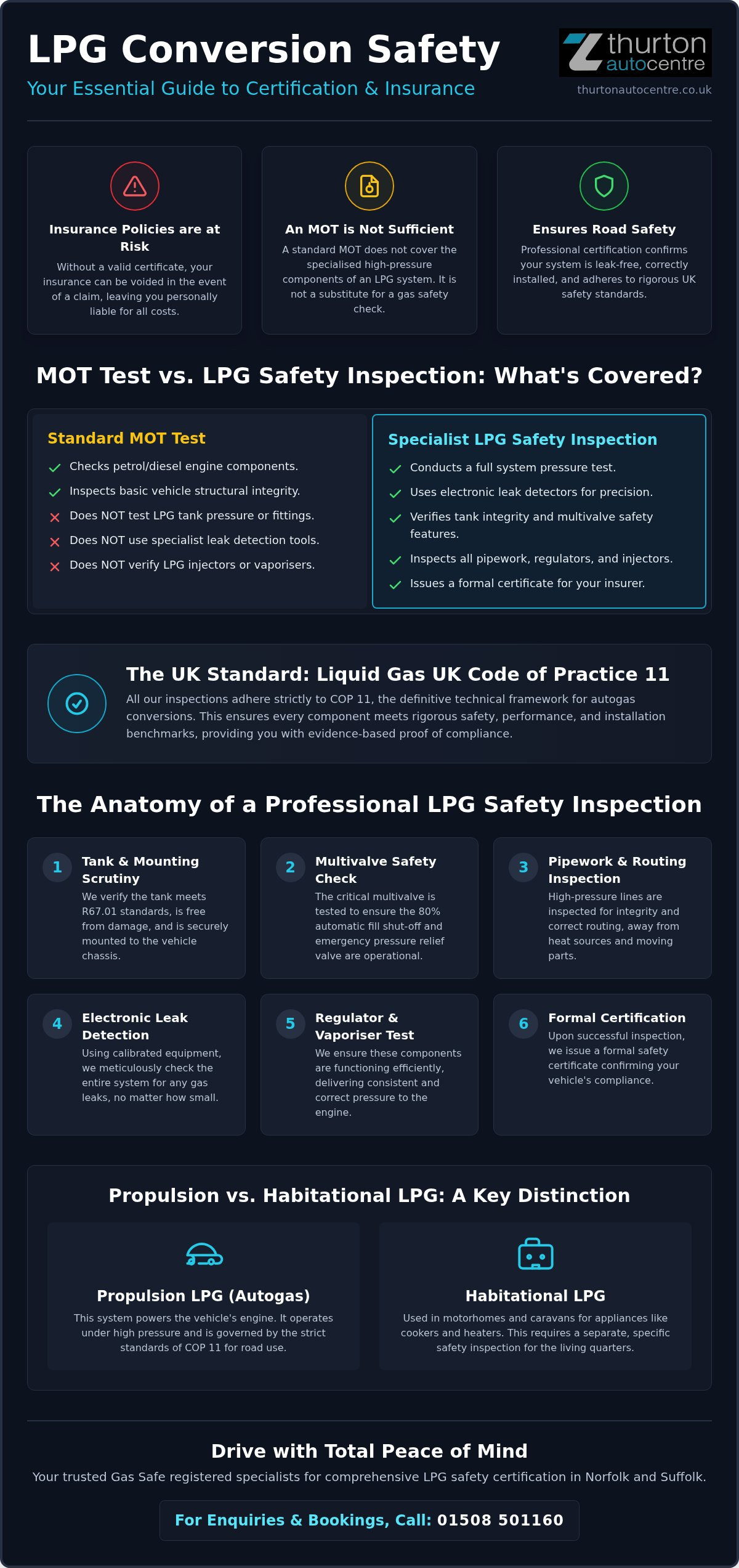
Many motorists mistakenly assume that a standard MOT covers the gas system. This isn't the case. An MOT examiner primarily focuses on the petrol or diesel components and basic structural integrity. They don't possess the specialised diagnostic tools or the specific training required to pressure-test an LPG tank or inspect the complex injectors and vaporisers. Without a dedicated lpg conversion safety certificate, the most critical part of your fuel system remains unverified by a specialist.
The Legal and Insurance Framework
Insurance companies operate on the principle of disclosed risk. If you modify a vehicle to run on gas, your insurer requires professional validation that the work meets industry codes of practice. While a "certificate of conformity" is typically issued at the time of the initial installation, an annual safety check provides ongoing proof of maintenance. Driving without this documentation can lead to a voided policy, leaving you personally liable in the event of an accident.
Who Can Authorise and Issue the Certificate?
Certification must be provided by technicians who aren't just general mechanics, but Gas Safe registered specialists with specific categories for LPG vehicles. At Thurton Auto Centre, we follow a disciplined, clinical approach to these inspections. We use electronic leak detection and calibrated manometers to provide a level of precision that general workshops simply can't match. This methodical expertise is why we're a trusted choice for gas safety across Norfolk and Suffolk.
Protecting Resale Value
A valid certificate doesn't just provide peace of mind; it protects the resale value of your motorhome or car. Savvy buyers will look for evidence of professional servicing before committing to a purchase. Having a clear, documented history of safety checks makes your vehicle a much more attractive, low-risk proposition on the second-hand market, ensuring you get a fair price for your investment.
UK Standards for Vehicle LPG Installations and Conversions
Maintaining a vehicle gas system requires more than just mechanical intuition; it demands strict adherence to the industry standards established by Liquid Gas UK. These regulations ensure that every component, from the filler point to the fuel injectors, operates under high pressure without compromising the safety of the occupants or the public. A professional lpg conversion safety certificate acts as your proof that these rigorous benchmarks have been met with precision.
The primary framework for these installations is the Liquid Gas UK Code of Practice 11, which provides the definitive technical requirements for aftermarket autogas conversions. This document outlines everything from the structural integrity of the fuel tank to the specific types of high-pressure pipework permitted. Our role as methodical experts is to verify that your system hasn't just been "fitted," but has been engineered to remain disciplined, accurate, and compliant over thousands of miles.
Technical Specifications for Tanks and Pipework
Safety begins with the storage vessel. LPG tanks must be manufactured to specific international standards, such as R67.01, and must never be modified or repaired. During an inspection for an lpg conversion safety certificate, we scrutinise the tank's mounting and the condition of the multivalve. This valve is a critical safety component that includes an 80% automatic shut-off to prevent overfilling and a pressure relief valve for emergencies. We also ensure that gas lines are routed away from heat sources like the exhaust and moving parts like the suspension, using only approved copper or plastic-coated steel piping.
Emissions and Performance Standards
A correctly converted system should mirror the performance of the original petrol engine whilst often reducing certain tailpipe emissions. This requires the LPG Electronic Control Unit (ECU) to be perfectly calibrated to the vehicle's original sensors. The optimal stoichiometric air-fuel ratio for LPG combustion is approximately 15.5:1 by mass, which is slightly leaner than the 14.7:1 required for petrol. If this ratio is incorrect, it can lead to "running lean," which increases combustion temperatures and can cause long-term damage to engine valves. Our diagnostic process involves checking these fuel trims to ensure your engine remains healthy and efficient.
If you're unsure whether your current system meets these modern technical standards, you can easily book your inspection online with our specialist team. We'll provide a thorough audit of your installation to ensure it remains fit for purpose and fully compliant with all UK safety codes.
Habitational vs. Propulsion LPG: Understanding the Inspection Requirements
Many motorhome owners across Norfolk and Suffolk are surprised to learn that their vehicle often houses two entirely separate gas systems. One system provides the fuel necessary for propulsion, whilst the other supports the habitational comforts of the living space. While both systems rely on liquid petroleum gas, the technical requirements for their maintenance and certification are distinct. Obtaining an lpg conversion safety certificate usually focuses on the high-pressure propulsion system, but a truly responsible owner ensures both systems undergo rigorous, professional scrutiny.
A thorough motorhome habitation check is the industry standard for verifying the safety of your living area. This process includes testing the hobs, refrigerators, and space heaters that make travel comfortable. Unlike propulsion systems, which are designed for the rigours of engine combustion, habitation gas operates at a lower pressure. However, it carries the significant risk of carbon monoxide (CO) poisoning if ventilation is blocked or appliances are faulty. We treat these checks with a clinical level of detail, ensuring that your home on wheels remains a safe sanctuary.
LPG Gas Safety Checks for Leisure Vehicles
Our habitation inspections focus on the critical safety features that prevent domestic accidents. This involves testing Flame Failure Devices (FFDs) on every burner to ensure the gas supply cuts off immediately if the flame is extinguished. For those using "Gaslow" refillable cylinder systems, we inspect the filler hoses and mounting brackets for any signs of fatigue or stress. Proper ventilation is non-negotiable; we verify that all floor vents and flues are clear, ensuring a safe environment for both cooking and sleeping. We use calibrated manometers to perform let-by and tightness testing, providing documented evidence that your system is leak-free.
While we focus on the safety of leisure vehicle systems, for those who require similar professional gas and heating services for their homes or businesses in the south-east, We are a trusted plumbing & heating company providing reliable, high-quality services across London and Kent.
Propulsion System Integrity
The propulsion system is a more complex mechanical beast. It involves a vaporiser that converts liquid gas into a combustible vapour and fuel injectors that must pulse with millisecond precision. During our inspection for your lpg conversion safety certificate, we examine the filler point for secure mounting and potential corrosion, as this is a common point of failure. Propulsion systems require a different technical register because the pressures and electronic integrations are significantly more demanding. We use specialised diagnostic equipment to communicate with the LPG ECU, ensuring it isn't fighting against the vehicle's original engine management system. This methodical approach is what differentiates a professional certificate from a simple visual check, ensuring your conversion is truly fit for purpose.
The Anatomy of a Professional LPG Safety Inspection
Our inspection process isn't a cursory glance or a simple "sniff test." It's a disciplined, technical audit designed to identify potential hazards before they become dangerous. By following a systematic sequence, our technicians ensure that every lpg conversion safety certificate we issue is backed by empirical evidence and technical precision. We don't rely on guesswork; we rely on calibrated equipment and a methodical mindset that prioritises your safety above all else.
Precision is at the heart of our operation. We utilise electronic leak detection and high-accuracy manometers to monitor the system's behaviour under various conditions. This level of detail allows us to provide a transparent account of your vehicle's health, giving you the confidence that your conversion remains compliant with the highest UK standards. Whether you're a local motorist in Norfolk or a visitor from across Suffolk, our goal is to deliver technical clarity through a process-driven approach.
Step 1: The High-Pressure Leak Test
The first stage of our inspection involves isolating the gas system and monitoring its internal pressure. We use specialised manometers to observe the system for a specific duration, looking for even the slightest variance. Any measurable drop in pressure during a standardised 10-minute test signifies a leak in the high-pressure line or a failing seal, representing a critical failure that compromises the entire system's safety. This is often accompanied by an electronic "sniffer" test around the tank multivalve and solenoid to pinpoint the exact source of any escaping vapour.
Step 2: Component Condition and Mounting
Once we've verified the system's tightness, we move to a physical audit of the hardware. We ensure the LPG tank is securely fastened to the chassis, checking for any signs of fatigue in the mounting brackets or the surrounding floor pan. In some cases, we may even perform chassis welding checks to ensure structural integrity. We pay close attention to the hoses, looking for "perishing" or UV damage amongst exposed sections that could lead to future failures. Finally, we verify that the vaporiser is correctly integrated into the vehicle's cooling system, ensuring it can efficiently convert liquid gas into vapour without freezing.
Step 3: Verification of Safety Cut-offs
The final phase focuses on the electronic and mechanical fail-safes. We test the emergency shut-off functionality from the driver’s seat, confirming that the solenoids close immediately when the system is deactivated. It's vital that the vehicle reverts to petrol automatically if LPG pressure fails, preventing the engine from stalling in traffic. After these functional tests are complete, we issue the final professional LPG gas testing services record, which serves as your formal documentation for insurance and safety files.
Expert LPG Safety Certification in Norfolk and Suffolk
Finding a specialist workshop in East Anglia that combines technical mastery with an approachable service can be a challenge for many motorists. Thurton Auto Centre serves as the primary technical authority for drivers across Norfolk and Suffolk, bridging the gap between standard mechanical work and specialised gas safety. Whether you're based in the heart of Norwich, the coastal community of Great Yarmouth, or the market towns of Beccles and Bungay, our facility is equipped to handle your requirements with the highest level of discipline.
Our "Fit for Purpose" promise is central to our operation, particularly for those looking for pre-sales reassurance. If you're buying or selling a converted vehicle, our audit provides the evidence-based results needed to verify the system's integrity. To maximise efficiency, we recommend combining your check for an lpg conversion safety certificate with your annual MOT test or vehicle service. This integrated approach ensures your entire vehicle is scrutinised in a single visit, saving you time whilst maintaining a comprehensive safety record.
A Disciplined Approach to Leisure Vehicle Care
As an AWS (Approved Workshop Scheme) accredited centre, we maintain a clinical standard of care that is specifically tailored for motorhome and caravan owners. We don't just look at the engine; we understand the complexities of the habitational space. By integrating your gas checks into our comprehensive motorhome care plans, you can ensure that your leisure vehicle remains compliant and roadworthy throughout the year. We pride ourselves on providing transparent reports that offer genuine peace of mind to our community.
Booking Your Inspection at Thurton
Organising your inspection at our Thurton-based facility is straightforward. To ensure we can perform a complete functional test, please ensure your vehicle has an adequate supply of LPG in the tank before your arrival. This allows us to verify the changeover switches and pressure levels under real-world operating conditions. Our team is ready to provide the professional guidance you need to keep your vehicle safe and your insurance valid. Contact our office on 01508501160 to discuss your requirements or to book your next lpg conversion safety certificate inspection.
Secure Your Vehicle's Future and Compliance
Maintaining a converted vehicle requires a commitment to technical precision and documented safety. By understanding the rigorous standards of COP 11 and the vital distinction between habitation and propulsion gas systems, you're better equipped to protect your investment. A valid lpg conversion safety certificate isn't just a formality; it's the essential bridge between mechanical engineering and legal compliance. It ensures your insurance remains valid whilst providing the absolute peace of mind that your vehicle is safe for the road.
As an independent, family-owned AWS Accredited Workshop, we bring a disciplined, transparent, and expert approach to every inspection. We utilise specialised LPG diagnostic equipment to provide the technical clarity that general garages often miss. Our methodical specialists are dedicated to delivering excellence for motorists across Norfolk and Suffolk, ensuring every system we audit is truly fit for purpose.
We look forward to helping you drive with total confidence. Whether you're preparing for a seasonal trip or readying a vehicle for sale, our friendly team is here to provide the professional reassurance you deserve.
Frequently Asked Questions
Is an LPG conversion safety certificate a legal requirement for my car?
An lpg conversion safety certificate isn't a statutory legal requirement in the same way as an MOT, but it's essential for meeting your legal obligations under the Road Vehicle (Construction and Use) Regulations. Without it, you cannot prove that your vehicle's modification is safe for road use. This lack of evidence often leads to significant complications with insurance providers who demand proof of professional installation.
How long does a professional LPG safety check usually take to complete?
A comprehensive inspection generally takes between 60 and 90 minutes to complete. This timeframe allows our technicians to perform the high-pressure leak tests and functional audits required for a thorough assessment. If your system is particularly complex or located in a hard-to-reach area of the chassis, the process might take slightly longer to ensure every component is thoroughly scrutinised.
Does my insurance policy become void if I cannot produce an LPG certificate?
Your insurance policy could indeed become void if you're unable to produce a valid lpg conversion safety certificate following an accident. Most insurers treat an LPG conversion as a material change to the vehicle's risk profile. If they haven't received documentation from a qualified specialist, they may argue that the vehicle was not in a roadworthy or disclosed condition, potentially leading to a rejected claim.
Can any local garage issue a valid LPG conversion safety certificate?
No, only specialised workshops with qualified technicians can issue a valid certificate. General mechanics usually lack the calibrated manometers and electronic leak detectors required for this level of diagnostic work. At Thurton Auto Centre, we maintain the specific technical registrations needed to provide authoritative, industry-recognised documentation that satisfies all major UK insurance companies.
What happens if my vehicle fails its LPG safety inspection at your centre?
If your vehicle fails the inspection, we'll provide a transparent, itemised report detailing the specific faults identified. We don't leave you without a solution; our team will explain the necessary remedial work required to meet Liquid Gas UK standards. Once the repairs are completed, we can re-test the system to ensure it's safe before issuing your final documentation.
How often should I have my LPG system inspected for safety and compliance?
We recommend an annual inspection to maintain the safety and efficiency of your gas system. While some components are built to last, seals can perish and pipework can suffer from road debris or corrosion over time. Regular checks for your lpg conversion safety certificate ensure that small issues don't develop into dangerous leaks or expensive mechanical failures.
Will an LPG conversion affect my vehicle’s MOT test results?
A correctly installed LPG system won't negatively impact your MOT results. In fact, an LPG-powered engine often produces lower emissions, which can be beneficial during the exhaust gas test. However, an MOT is not a substitute for a dedicated gas safety check, as it doesn't involve the deep-level pressure testing required to verify the system's internal integrity.
What is the difference between a CP44 certificate and a vehicle LPG check?
Disclaimer
Terms and Conditions
Who we are and how to contact us
https://wwwthurtonautocentre.co.uk is a site operated by Thurton Auto centre. We are a limited company registered in England and Wales under company number 15780586 and have our registered office at The Garage, Norwich Road, Thurton, Norwich, Norfolk, NR14 6AW. Our main trading address is The Garage, Norwich Road, Thurton, Norwich, Norfolk, NR14 6AW.
To contact us, please email info@thurtonautocentre.co.uk or telephone our customer service line on01508 501160or write to us at The Garage, Norwich Road, Thurton, Norwich, Norfolk, NR14 6AW
Information on this site
The content on our site is provided for general information only. It is not intended to amount to advice on which you should rely. You must obtain professional or specialist advice before taking, or refraining from, any action on the basis of the content on our site.
Although we make reasonable efforts to update the information on our site, we make no representations, warranties or guarantees, whether express or implied, that the content on our site is accurate, complete or up to date.
Any descriptions or illustrations on our site are for illustrative purposes only, and are published for the sole purpose of giving an approximate idea of the vehicles described in them. They will not form part of any contract or have any contractual force. We have made every effort to display the colours accurately, but we cannot guarantee that a device's display of the colours accurately reflects the colour of the vehicles.
We reserve the right to amend the specification of any vehicle described on this site if required to do so by any applicable statutory or regulatory requirement, to implement minor technical adjustments and improvements, or if the amendment will not materially affect its nature or quality.
Our site is only for users in the UK
Our site is directed to people residing in the United Kingdom. We do not represent that content available on or through our site is appropriate for use or available in other locations. You may use this site to reserve a vehicle or test drive from an address outside the United Kingdom, but we do not deliver vehicles outside the United Kingdom, and any test drives must take place at the address in the United Kingdom which we specify.
Events outside our control
We will not be liable or responsible for any failure to perform, or delay in performance of, any of our obligations under the Contract that is caused by any act or event beyond our reasonable control (Event Outside Our Control).
If an Event Outside Our Control takes place that affects the performance of our obligations under the Contract, we will contact you as soon as possible to let you know and we will take steps to minimise the effect of the delay. We will arrange a new date for the test drive after the Event Outside Our Control is over. Provided we do this we will not be liable for delays caused by the event, but if the Event Outside Our Control has continued, or seems likely to continue, for more than 30 days, you may contact us to cancel the Order and receive a refund of any reservation or booking fee you have paid.
How you may use material on our site
We are the owner or the licensee of all intellectual property rights in our site, and in the material published on it. Those works are protected by copyright laws and treaties around the world. All such rights are reserved.
You may print off one copy, and may download extracts, of any page(s) from our site for your personal use and you may draw the attention of others within your organisation to content posted on our site.
You must not modify the paper or digital copies of any materials you have printed off or downloaded in any way, and you must not use any illustrations, photographs, video or audio sequences or any graphics separately from any accompanying text.
Our status (and that of any identified contributors) as the authors of content on our site must always be acknowledged.
You must not use any part of the content on our site for commercial purposes without obtaining a licence to do so from us or our licensors.
You print off, copy or download any part of our site in breach of these terms of use, your right to use our site will cease immediately and you must, at our option, return or destroy any copies of the materials you have made.
We are not responsible for websites we link to
Where our site contains links to other sites and resources provided by third parties, these links are provided for your information only. Such links should not be interpreted as approval by us of those linked websites or information you may obtain from them.
We have no control over the contents of those sites or resources.
Our responsibility for loss or damage suffered by you
Whether you are a consumer or a business user:
We do not exclude or limit in any way our liability to you where it would be unlawful to do so. This includes liability for death or personal injury c