
A van off the road can disrupt a working day. Van servicing for a small business in Norfolk means planning routine maintenance around each vehicle’s condition and workload, and arranging MOTs and repairs when needed. A clear plan helps you understand what work is due and make informed maintenance decisions.
It’s understandable to want dependable support without losing sight of time, vehicle suitability or the quality of replacement parts. This article explains what van servicing can involve, how MOTs and repairs fit into a maintenance plan, and what to consider when choosing genuine parts or a vehicle option. You’ll also find out about the Norwich location and the ways to book, so you can see how the service fits your business needs.
Key Takeaways
- Plan servicing around your van’s condition and working demands, and understand how MOTs and repairs fit into maintenance.
- Consider how genuine parts and technician expertise can support informed decisions about repair work.
- Learn what to consider when arranging servicing for cars and commercial vehicles alongside your business vans.
- Find out what to look for in a Norwich service location and how to prepare when booking an MOT or service.
- See how the available servicing, MOT and repair options can help you choose a practical next step.
Table of Contents
Genuine parts and technician expertise
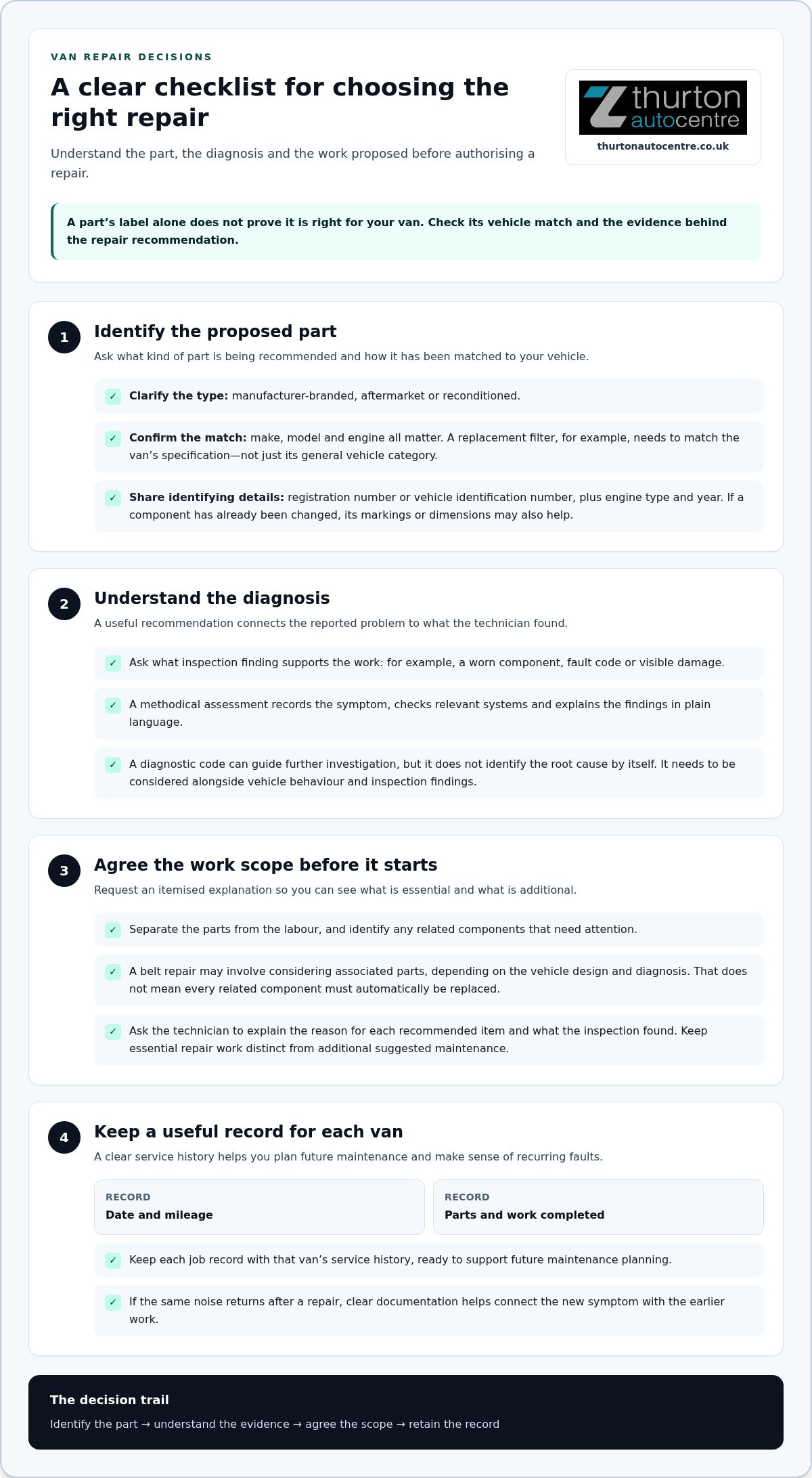
Parts choice affects a repair decision, so ask for a clear description before authorising work. “Genuine” generally means a part supplied under the vehicle manufacturer’s brand, while aftermarket parts are made for compatible applications. Neither label alone proves that a part is right for your van. The make, model, engine and existing component all matter. For example, a replacement filter needs to match the van’s specification, not just its general vehicle category.
Ask the technician to identify the proposed part and explain how it suits your vehicle. The registration number or vehicle identification number can help identify the correct application, alongside details such as the engine type and year. If the component has already been changed, its markings or dimensions may also be relevant. A useful explanation links the diagnosis to the part: a worn component, fault code or visible damage is a clearer basis for a repair than a vague recommendation.
Before work starts, request an itemised explanation of the job. It should separate parts from labour and identify any related components that need attention. For example, a belt repair may involve considering associated parts, depending on the vehicle design and diagnosis. That does not mean every related component must automatically be replaced. The technician should explain the reason for each recommended item and what the inspection found.
- Part identity: Ask whether the part is manufacturer-branded, aftermarket or reconditioned.
- Vehicle match: Confirm that the part is selected for your van’s make, model and engine.
- Repair evidence: Ask what inspection or diagnostic result led to the recommendation.
- Work scope: Separate essential repair work from additional suggested maintenance.
Technician expertise shows in the process, not just the final invoice. A methodical assessment records the reported symptom, checks relevant systems and explains the findings in plain language. If a warning light appears, a diagnostic code can guide further investigation, but it does not by itself identify the root cause. The technician needs to interpret it alongside the vehicle’s behaviour and inspection findings.
For a small business, keep each job record with the van’s service history. Note the date, mileage, parts and work completed, then use that record to plan future maintenance or report a recurring fault. If the same noise returns after a repair, clear documentation helps connect the new symptom with the earlier work. This supports informed decisions: identify the part, understand the evidence, approve the work and retain the records.
Van servicing, MOTs and repairs
Plan servicing around the van manufacturer’s schedule and working conditions. Keep MOTs, maintenance and repairs distinct in your records.
Service intervals and manufacturer recommendations
How often should business vans be serviced? Follow the schedule in the handbook or service information for the specific make, model and engine. The manufacturer’s recommendation is the starting point; mileage, operating conditions and service history help shape the maintenance plan.
A van making frequent short urban journeys, for example, may face different demands from one covering longer routes. Record the date and odometer reading at each visit, then use the manufacturer’s schedule to plan the next service. Don’t treat the MOT date as a substitute for routine servicing.
An MOT assesses roadworthiness at the time of the test; a service covers scheduled maintenance and the vehicle’s condition. Passing an MOT does not replace servicing, and servicing does not replace an MOT. Keep both due dates visible in your business calendar and plan ahead to minimise disruption to essential work.
How do servicing records affect van warranties and fleet compliance in the UK? A dated service history helps show that maintenance followed the manufacturer’s schedule, while the warranty terms determine how missed or incomplete servicing affects cover. For fleet administration, record each van’s mileage, completed work and supporting invoices, and keep those records easy to retrieve.
Can small businesses reclaim VAT on van servicing costs in the UK? A VAT-registered business can generally reclaim input VAT for servicing used in its taxable business activity, subject to applicable VAT rules and a valid VAT invoice. Keep the invoice and account for private use or any other factor affecting the business-use proportion.
If servicing identifies a repair need, ask what defect was found, what evidence supports the diagnosis and what work is required. Clarify whether the van can be used safely before repair. If the fault affects safe operation, keep it off the road until it is addressed. Record the decision and arrange the repair promptly; an MOT pass is not a reason to ignore a newly identified fault.
Choosing a Norfolk van garage
Which garages in Norfolk service vans for small businesses? Look for a garage that handles commercial vans and can carry out the work you need, such as servicing, MOT testing or repairs. Thurton Auto Centre provides van servicing, MOTs and repairs in Thurton, Norfolk. Before booking, provide the registration, make, model and a clear description of the issue.
For a business fleet, ask how completed work and follow-up recommendations are documented. A consistent service record for each vehicle makes it easier to plan maintenance and trace recurring faults. Once you have the vehicle details ready, you can use the online booking option to arrange a service or MOT.
Car and truck servicing
A small business may run cars, vans and heavier commercial vehicles for different jobs. A salesperson’s car, a delivery van and a work truck each bring different maintenance needs. Identify each vehicle’s role before arranging work, then provide its make, model, engine and registration. This helps the garage understand which vehicle is arriving and what service information applies.
Cars and commercial vehicles should not automatically share one maintenance checklist. A car used for client visits may have different usage patterns from a truck carrying equipment or materials. Explain how each vehicle is used, including frequent short trips, regular loads or long routes. This gives the technician useful context when assessing wear and selecting relevant checks.
For a car, describe specific symptoms rather than simply requesting a general inspection. Mention a change in braking feel, a warning light or an unusual sound, for example, and note when it occurs. For a truck, include its usual load and any changes in handling. Clear observations help focus the assessment on relevant components rather than a broad description.
Before booking work for a mixed fleet, prepare a separate record for each vehicle. Include its registration, current mileage, previous work and reason for the visit. Add business constraints, such as needing a particular vehicle for a scheduled delivery. This makes it easier to discuss the required work and coordinate appointments around operational demands.
- Cars: Describe the journey pattern and any change in performance, warning lights or braking behaviour.
- Vans: Explain the vehicle’s day-to-day role, route type and equipment carried.
- Trucks: State the vehicle type, typical load and any handling or running concerns.
- Every vehicle: Provide its registration and the work history relevant to the current visit.
Vehicle classification matters, too. “Truck” can refer to different types of commercial vehicle, so give the garage exact details rather than assuming a van booking covers it. A vehicle’s size, design and intended use can affect the workshop equipment and technical capability required. Accurate information at the enquiry stage helps establish whether the requested work suits the vehicle.
File invoices and completed-work records under the correct registration. If a car develops a repeat fault after repair, previous job details can show what has already been inspected or replaced. For a business operating several vehicle types, consistent records also make it easier to identify maintenance needs across the fleet without mixing up each vehicle’s history.
Finally, distinguish routine servicing from a repair request when describing the job. A planned service may coincide with a concern, such as a truck pulling to one side or a car making a new noise. State both clearly. This gives the technician a defined starting point for scheduled work and further investigation, while helping your business understand which findings relate to each task.
Norwich service location
For a small business, location affects how a van visit fits around routes, staff and delivery commitments. Norwich is the location identified for servicing. The practical question is whether taking each vehicle there fits your working day and fleet schedule.
Which Norfolk towns have van servicing suitable for small business fleets? Norwich is the named service location. Businesses based elsewhere in Norfolk can assess suitability by comparing their usual routes, travel time and vehicle availability with a Norwich appointment.
Start with the van’s working pattern. A business based in Wymondham, for example, can compare a Norwich visit with its normal operating route and decide whether to arrange servicing before or after local work. For a vehicle based further away, such as in King’s Lynn, travel planning may take greater priority. These are route-planning examples, not claims about service coverage in those towns.
Plan the journey before setting an appointment. Consider the van’s starting point, the workshop destination and its next scheduled job. Then decide whether it can be taken out of operation without affecting a delivery, site visit or staff shift. A business with several vans can stagger visits to keep essential transport available.
Useful details to plan include:
- Vehicle base: Record the town or worksite where each van normally starts its day.
- Route commitments: Identify deliveries, appointments or site work that rely on that vehicle.
- Fleet cover: Check which other vehicle can take over its duties during the visit.
- Journey timing: Compare travel to Norwich with the van’s existing route and working schedule.
For example, a Norwich business with one delivery van may need to plan around that vehicle’s dispatch schedule. A trades business operating from Dereham may instead consider whether a Norwich appointment fits between jobs or requires a separate trip. In both cases, matching the visit to the van’s role reduces avoidable disruption.
Businesses with vehicles based across Norfolk can plan by location rather than treating the fleet as one unit. Record each van’s base, planned maintenance and work commitments in the same schedule. That makes it easier to decide which vehicle can attend first and whether another van can cover its usual tasks.
Before travelling, have the vehicle registration and appointment details ready. Make sure the driver knows the destination and allows time for the journey from the van’s base. Preparation helps the visit fit into the working day, whether the van starts in Norwich, Great Yarmouth, Diss or another Norfolk town.
Service and MOT booking options
A clear booking request helps match the right work to each vehicle and the business schedule. Prepare the van’s details, the task required and any operating constraints before arranging an appointment.
What van servicing plans do Norfolk garages offer for business fleets? Options can range from booking each service separately to planning recurring maintenance around vehicle use. Some businesses coordinate servicing and MOT appointments, while others schedule work vehicle by vehicle to maintain fleet cover.
There is no single plan structure for every fleet. Compare what each arrangement covers, how work is recorded and whether the timing suits the manufacturer’s schedule. A business with a small number of vans may prefer separate appointments, while a larger fleet may benefit from a shared maintenance calendar.
Do Norfolk van service providers offer collection, delivery or mobile servicing? These differ from workshop servicing. When planning a workshop visit, include the van’s journey to and from the garage rather than assuming collection, delivery or mobile work is part of a standard booking. For immediate roadside needs that cannot wait for a workshop visit—such as lockouts or lost van keys—businesses often depend on on-site vehicle specialists, such as keyskev.co.uk for 24/7 mobile auto locksmith support across the Portsmouth area.
Before booking, assemble the details that help define the job:
- Vehicle identity: Provide the registration, make, model and engine details.
- Work required: State whether the request is for a service, MOT or a reported fault.
- Useful history: Note the mileage, previous work and any recurring symptoms.
- Business timing: Identify delivery runs, staff shifts or site visits affected by the appointment.
- Fleet coordination: List other vans needing attention and their individual due dates.
If a warning light appears before a planned service, for example, include it in the booking details. This gives the garage a specific concern alongside routine maintenance. If an MOT is also due, state that separately so the requested tasks are clear. A service and an MOT have different purposes, even when arranged close together.
For several vehicles, keep one schedule with a separate entry for each registration. Add the planned task and appointment date, then record the next maintenance point once the work is complete. This makes upcoming needs visible and helps avoid booking the wrong vehicle for the wrong job. Reviewing due dates alongside work commitments also helps identify which vans need attention first.
Use the online booking form to provide the vehicle and appointment details for a service or MOT.
Thurton Auto Centre: MOT
Thurton Auto Centre provides van servicing, MOT testing and repairs for businesses managing working vans. Whether an MOT is due, routine maintenance is approaching or a fault needs attention, these services can help you organise vehicle care.
Share the van’s registration, mileage and reason for booking so the requested work is clear. If a technician identifies a repair need, ask for the findings and recommended next steps before authorising additional work. Wet belt replacement is also available when it applies to the vehicle.
For small businesses arranging van servicing in Norfolk, consider how a Norwich visit fits around routes and vehicle availability. Contact Thurton Auto Centre on 01508501160 or visit thurtonautocentre.co.uk to discuss an MOT, service or repair.
Make maintenance part of your working plan
Set a regular time to review upcoming maintenance alongside each vehicle’s role in the business. This can help you plan workshop visits before they clash with important routes, projects or staff commitments. Give one person responsibility for updating the fleet schedule, and make sure drivers know how to report new faults promptly.
For van servicing for a small business in Norfolk, a clear booking request is a practical next step. Have the vehicle details and preferred appointment information ready, then describe the work required. Thurton Auto Centre provides van servicing, MOTs and repairs in Thurton, with online booking to help you organise a visit.
A structured approach makes maintenance decisions clearer. You can keep the business moving while giving each vehicle’s needs proper attention.
With a considered plan in place, you’re ready to manage your fleet’s next maintenance step with confidence.
Frequently Asked Questions
What is included in an interim, full and major van service?
An interim service is generally more limited, a full service covers broader routine checks, and a major service may include additional scheduled replacement items. Exact contents vary by vehicle and service schedule, so the label alone does not define the work. Compare whether oil and filter replacement, inspections and manufacturer-scheduled items are included, then match the written service scope to your van’s handbook.
How can a small business compare van service providers in Norfolk?
Compare how well the service suits your fleet: vehicle types, planned maintenance, fault diagnosis and records provided after the work. For a Norfolk business, also consider how the appointment fits vehicle use and the journey to Thurton. Thurton Auto Centre’s online booking process lets you set out the vehicle and work required, giving your enquiry a practical starting point for discussing the right service.
Disclaimer
Terms and Conditions
Who we are and how to contact us
https://wwwthurtonautocentre.co.uk is a site operated by Thurton Auto centre. We are a limited company registered in England and Wales under company number 15780586 and have our registered office at The Garage, Norwich Road, Thurton, Norwich, Norfolk, NR14 6AW. Our main trading address is The Garage, Norwich Road, Thurton, Norwich, Norfolk, NR14 6AW.
To contact us, please email info@thurtonautocentre.co.uk or telephone our customer service line on01508 501160or write to us at The Garage, Norwich Road, Thurton, Norwich, Norfolk, NR14 6AW
Information on this site
The content on our site is provided for general information only. It is not intended to amount to advice on which you should rely. You must obtain professional or specialist advice before taking, or refraining from, any action on the basis of the content on our site.
Although we make reasonable efforts to update the information on our site, we make no representations, warranties or guarantees, whether express or implied, that the content on our site is accurate, complete or up to date.
Any descriptions or illustrations on our site are for illustrative purposes only, and are published for the sole purpose of giving an approximate idea of the vehicles described in them. They will not form part of any contract or have any contractual force. We have made every effort to display the colours accurately, but we cannot guarantee that a device's display of the colours accurately reflects the colour of the vehicles.
We reserve the right to amend the specification of any vehicle described on this site if required to do so by any applicable statutory or regulatory requirement, to implement minor technical adjustments and improvements, or if the amendment will not materially affect its nature or quality.
Our site is only for users in the UK
Our site is directed to people residing in the United Kingdom. We do not represent that content available on or through our site is appropriate for use or available in other locations. You may use this site to reserve a vehicle or test drive from an address outside the United Kingdom, but we do not deliver vehicles outside the United Kingdom, and any test drives must take place at the address in the United Kingdom which we specify.
Events outside our control
We will not be liable or responsible for any failure to perform, or delay in performance of, any of our obligations under the Contract that is caused by any act or event beyond our reasonable control (Event Outside Our Control).
If an Event Outside Our Control takes place that affects the performance of our obligations under the Contract, we will contact you as soon as possible to let you know and we will take steps to minimise the effect of the delay. We will arrange a new date for the test drive after the Event Outside Our Control is over. Provided we do this we will not be liable for delays caused by the event, but if the Event Outside Our Control has continued, or seems likely to continue, for more than 30 days, you may contact us to cancel the Order and receive a refund of any reservation or booking fee you have paid.
How you may use material on our site
We are the owner or the licensee of all intellectual property rights in our site, and in the material published on it. Those works are protected by copyright laws and treaties around the world. All such rights are reserved.
You may print off one copy, and may download extracts, of any page(s) from our site for your personal use and you may draw the attention of others within your organisation to content posted on our site.
You must not modify the paper or digital copies of any materials you have printed off or downloaded in any way, and you must not use any illustrations, photographs, video or audio sequences or any graphics separately from any accompanying text.
Our status (and that of any identified contributors) as the authors of content on our site must always be acknowledged.
You must not use any part of the content on our site for commercial purposes without obtaining a licence to do so from us or our licensors.
You print off, copy or download any part of our site in breach of these terms of use, your right to use our site will cease immediately and you must, at our option, return or destroy any copies of the materials you have made.
We are not responsible for websites we link to
Where our site contains links to other sites and resources provided by third parties, these links are provided for your information only. Such links should not be interpreted as approval by us of those linked websites or information you may obtain from them.
We have no control over the contents of those sites or resources.
Our responsibility for loss or damage suffered by you
Whether you are a consumer or a business user:
We do not exclude or limit in any way our liability to you where it would be unlawful to do so. This includes liability for death or personal injury c